


Age Range: 18–24 months
Focus: Familiarity, Rhythm, Zero Pressure
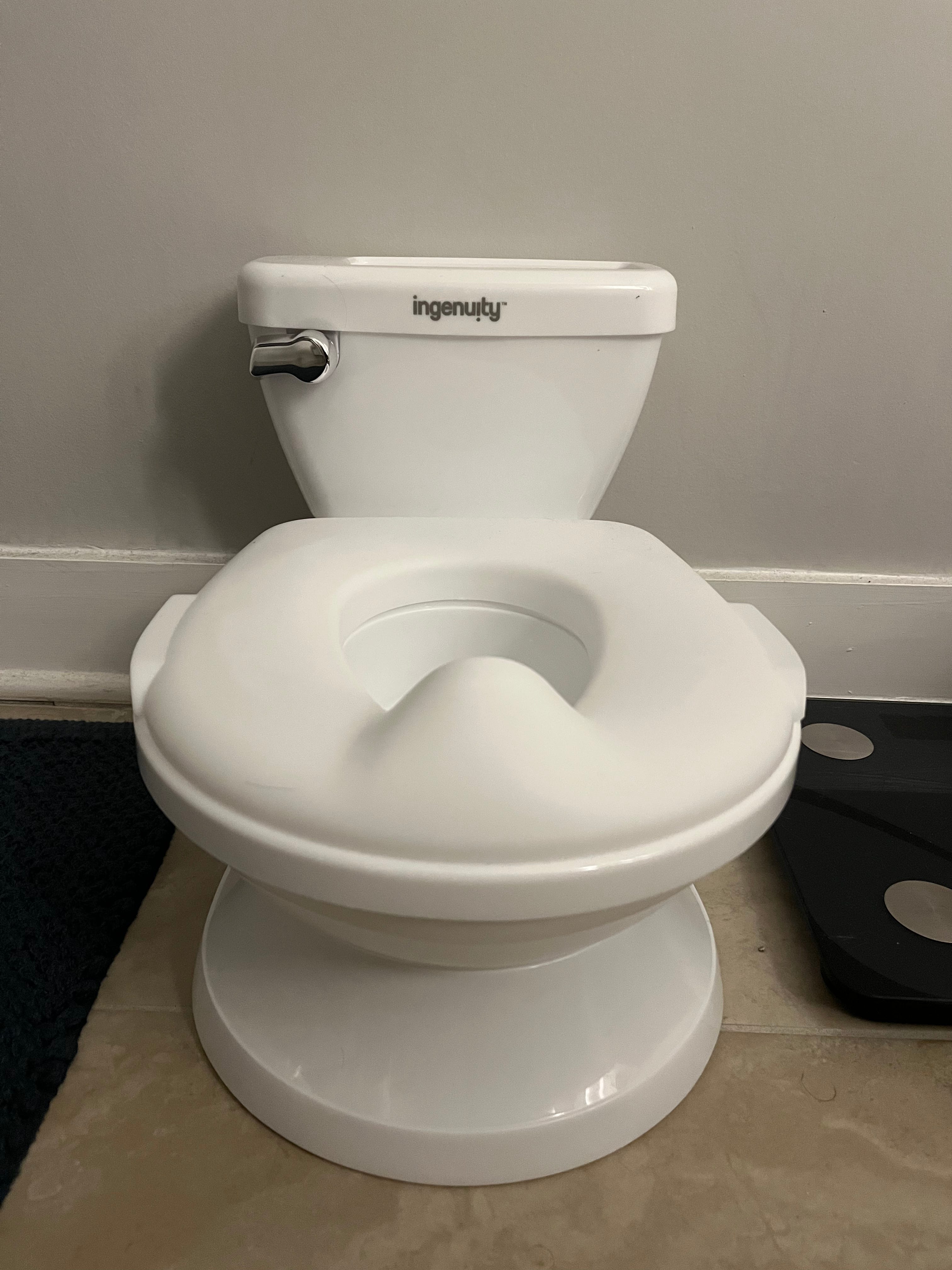
I bought Nina the Summer Infant My Size Potty and placed it directly across from my toilet.
It makes real flush sounds, so I showed her how that worked. I tapped the seat lightly to invite her to sit.
She didn’t sit.
She just copied me while smiling and double-tapped the seat.
Fair enough.
This wasn’t going to be instant. I let it ride—until one day she took a dump in the bathtub.
Reality check: girls do, in fact, poop.
That was the sign.
Around the same time, Nina moved up to the toddler class at daycare, where toilet training is part of the curriculum. Perfect timing. No need to force anything at home—just reinforce what was already being introduced elsewhere.
Over the next few weeks, I started noticing patterns. She’d squat near the potty. Hover around it. Acknowledge it without committing.
So I started gently placing her in front of it.
Eventually, she sat.
That’s when it clicked: what was missing wasn’t motivation—it was rhythm.
I didn’t need pressure.
I needed a simple, repeatable routine.
Which brings me to this:
This is not potty training yet.
This is potty orientation.
At this stage, the goal isn’t results.
It’s calm exposure, consistency, and positive association.
Potty Chair vs. Potty Training Seat
(What Actually Matters)
There are two common approaches when you start:
1. Standalone Potty Chair
A small, independent potty that sits on the floor.
2. Potty Training Seat
A child-sized insert that sits on top of the regular toilet.
Both can work—but they serve different purposes at this stage.
Why a Potty Chair Works Better First
For early orientation (18–24 months), a potty chair has clear advantages:
Accessible
No climbing. No balancing. No fear of falling in.Less intimidating
Full-size toilets are loud, tall, and overwhelming to toddlers.Creates ownership
This isn’t dad’s toilet.
This is her potty.Encourages independence
She can approach it, sit, stand, and engage on her own terms.
At this stage, confidence matters more than efficiency.
When a Training Seat Makes Sense
A training seat works better later, when:
Your child is already comfortable sitting to go
They’re physically steady enough to climb safely
You’re transitioning toward the big toilet
You want fewer cleanup steps
Starting with a training seat too early can backfire if the toilet itself feels scary or foreign.
What I Chose (And Why)
I went with the Summer Infant My Size Potty.
It looks like a real toilet.
It makes real flushing sounds.
It sits at her level.
That combination matters.
It bridges the gap between play and reality without pressure. She gets familiar with the concept before being asked to perform.
At this stage, the goal isn’t success.
It’s comfort, curiosity, and calm repetition.
The performance comes later.
Phase 1: Introduction & Familiarization (Weeks 1–2)
The potty becomes part of her environment—not an event.
What I do:
Let her explore the potty daily (fully clothed or diapered)
Keep it visible—bathroom or play area, wherever she’s relaxed
Narrate casually:
“This is where we pee and poop. You’ll get to try soon.” or the classic banger “Pee-pee poo-poo pee-pee poo-poo!”
Low-stakes sits (1–2x per day):
Morning after waking
Before bath
Before or after nap
No expectations. No timers.
If she sits for 10 seconds, that counts.
Goal:
She learns the potty is normal, safe, and boring—in a good way.
Phase 2: Routine Building (Weeks 3–4)
Now we attach the potty to predictable moments.
Potty timing anchors:
First thing in the morning
After meals or snacks
Before bath
Before bedtime
Diaper stays on for now.
I say:
“Let’s sit on the potty before we put on a fresh diaper.”
She sits for 1–2 minutes max.
If she goes:
“You peed in the potty!” (calm, genuine)
If she doesn’t:
“That’s okay. We’ll try later.”
No disappointment. No hype.
Goal:
Potty becomes part of the day’s rhythm—not a pop quiz.
Daily Potty Rhythm (Intro Stage)
Upon waking: Sit briefly → fresh diaper after
After meals: Sit briefly → pattern awareness
Before bath: Try potty → already undressing
Before bed: Final sit → reinforces routine
Dad Techniques That Actually Help
Modeling works
If you’re comfortable, let her see you use the toilet. Toddlers copy everything.Praise effort, not output
“You sat on the potty by yourself.”Use a consistent cue phrase
“Potty time.”
“Let’s try pee pee.”Let her flush or help empty the potty
This is weirdly motivating.If she resists, abort immediately
Try again later. No forcing.
Helpful Extras (Optional)
Potty board books (Leslie Patricelli’s Potty is perfect)
Stickers, high-fives, silly songs
(No candy. No bribery arms race.)Easy-off clothes or training pants when ready
Signs She’s Ready for the Next Phase
Look for patterns—not perfection:
Dry for 1.5–2 hours
Communicates before or after going
Shows interest in bathroom routines
Starts predicting when she needs to go
Once you see 2–3 consistently, you can move toward:
Short diaper-free windows
More active training
Zaddy Principle
This phase is about trust, not control.
Potty training goes sideways when parents rush it, dramatize it, or turn it into a spectacle.
Calm exposure now = fewer battles later.
This isn’t survival-mode parenting.
It’s quiet modeling.
PS
If anything here hits close to home and you want to talk it through privately, just reply to this email.
Like this?
The Zaddy Codex is where the real blueprint lives.
Tactical essays for sovereign men rebuilding in the collapse.
🔒 Join the paid tier to get access.
From the Vault:
Poison for the Heart • The Heartiste Maxims • The Desi Playboy Manual • The Bonecrker Codex — free download
Z-Ledger:
A private net worth & financial clarity tool I use to track the rebuild.
Launch →
In the trenches of potty training my daughter as we speak. Thanks for this🙏🏾
Good luck. With my oldest we let her be pants free in the backyard all weekend with a potty. Had a good hose and shovel