

My divorce wasn’t expensive just because of the legal fees.
It was expensive because of how I responded to the stress.
Between attorney meetings, paperwork, and constant uncertainty, spending became frictionless.
A drink after work.
Dinner instead of cooking.
An Uber instead of walking.
Another Amazon order because waiting suddenly felt inconvenient.
After everything that was happening, I told myself I deserved it.
None of the purchases felt reckless.
They felt like relief.
Once the divorce settled, I could finally see the pattern.
I wasn’t buying things because I needed them.
I was buying temporary relief from a problem money couldn’t solve.
Then another question hit me.
How was I supposed to afford the post-divorce trip I’d been dreaming about if I kept leaking money every time life became uncomfortable?
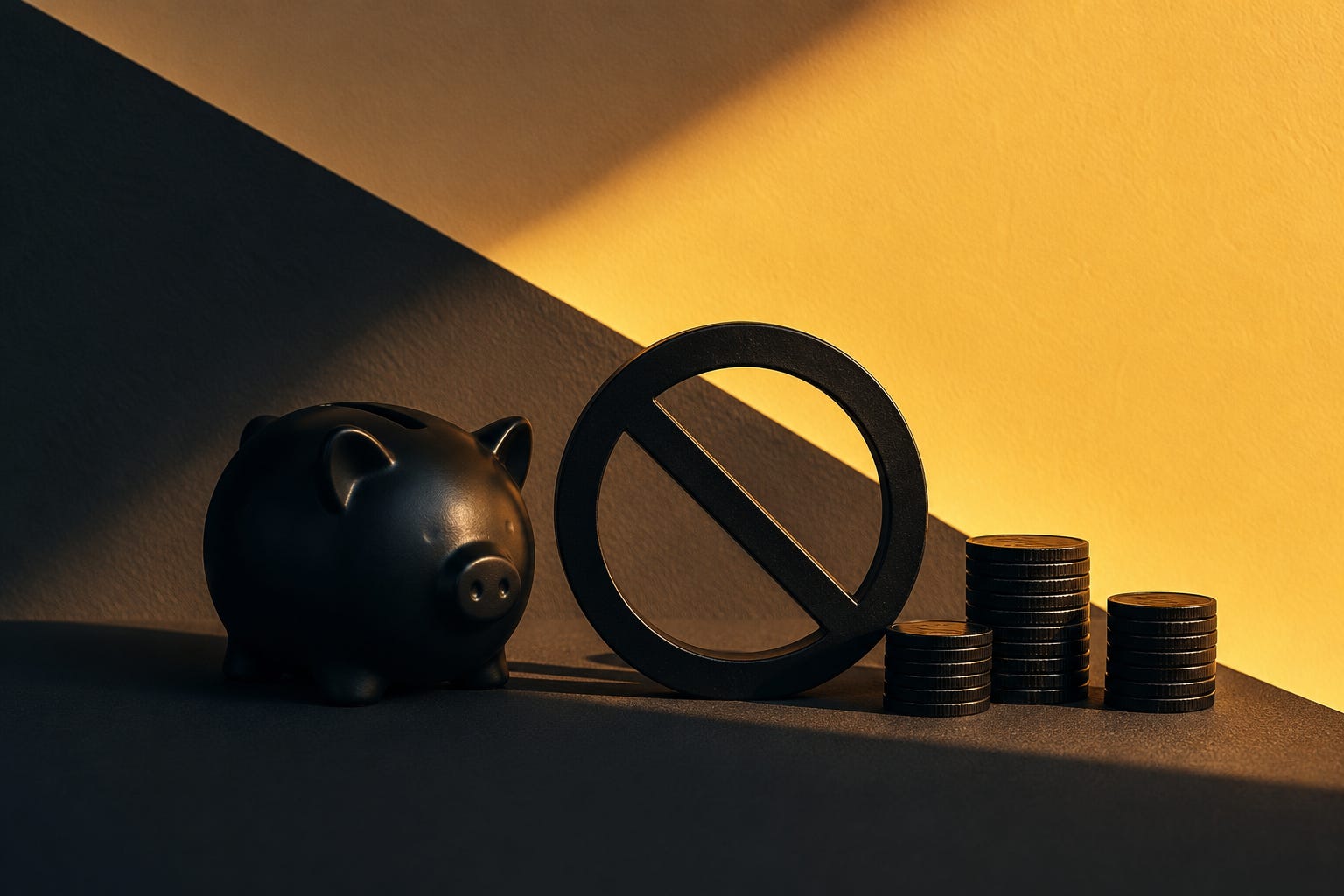
That’s when I built The No-Spend Protocol.
Most people assume they have an income problem.
Sometimes they do.
But plenty have an autopilot problem.
Money rarely disappears in one catastrophic purchase.
It leaks through dozens of decisions too small to feel consequential.
“I’ll just grab lunch.”
“One drink won’t hurt.”
“I don’t feel like cooking.”
“I’ll just Uber.”
“I’ll order it from Amazon.”
None of them feels expensive on its own.
Together, they’re why the paycheck disappears before the month does.
The No-Spend Protocol isn’t about becoming cheap.
It’s about interrupting the machine long enough to see what’s running it.
Freeze Lifestyle Spending
For seven days, discretionary lifestyle spending stops.
No restaurants.
No bars.
No alcohol.
No coffee shops.
No Amazon.
No entertainment purchases.
No impulse spending.
Bills still get paid.
Groceries still get bought if you actually need them.
Life continues.
But if the purchase improves your lifestyle today without being necessary to keep your life functioning, it waits.
Not forever.
Seven days.
The objective isn’t deprivation.
It’s distance.
Eat Your Inventory
Before buying more food, audit what you already own.
Open the refrigerator.
Open the freezer.
Open the pantry.
There’s probably a collection of half-used ingredients, frozen meat, canned food, leftovers, and things you bought with good intentions three weeks ago.
Eat them.
The fastest way to save money on groceries isn’t always finding cheaper groceries.
Sometimes it’s eating the groceries you already paid for.
Kill Convenience
Convenience has quietly become one of the largest discretionary expenses in modern life.
DoorDash.
Uber.
Delivery fees.
Lunch out.
Next-day shipping.
Each transaction exchanges money for a little less friction.
Sometimes the trade is worth it.
Usually, we don’t even evaluate the trade anymore.
That’s the problem.
For seven days, choose friction.
Cook.
Drive.
Walk.
Pack your lunch.
Wait for normal shipping.
Do the inconvenient thing yourself.
You start noticing how often you weren’t paying for the product.
You were paying to avoid effort.
Delay Every Purchase
Want something?
Write it down.
Then wait seven days.
Don’t negotiate with yourself.
Don’t browse reviews until you’ve manufactured a reason to need it.
Don’t put it in the cart “just in case.”
Wait.
Most purchases don’t survive the delay.
The desire was real.
The urgency wasn’t.
Replace Consumption With Construction
Spending isn’t always about acquiring something.
Sometimes you’re trying to change your state.
Bored.
Restless.
Lonely.
Stressed.
Tired.
So you buy something.
Instead, build something.
Lift.
Write.
Read.
Clean your apartment.
Work on your business.
Cook.
Play with your kid.
Fix something you’ve been ignoring.
Consumption gives you a state change.
Construction does too.
One leaves you with a receipt.
The other leaves you with something that wasn’t there before.
Audit the Urge
Don’t just track what you bought.
Track what you almost bought.
Tuesday — 3:15 PM
Wanted beers after work.
Went home instead.
Friday — 12:40 PM
Almost ordered lunch.
Ate leftovers.
This is where the protocol starts producing useful information.
By the end of seven days, patterns emerge.
Maybe you spend when you’re stressed.
Maybe it’s boredom.
Maybe Friday night is expensive because Friday night has always been expensive.
Maybe every office annoyance somehow ends with you sitting at a bar.
The transactions weren’t random.
Neither were the triggers.
Your bank statement is behavioral data.
Pause the Dates
This one is mostly for the men.
Dating and spending have a way of becoming the same activity.
A couple drinks.
Dinner.
Another bar.
Concert tickets.
An Uber.
Late-night food.
No single transaction looks catastrophic.
That’s the trap.
Fifty dollars here.
Another hundred there.
An active dating life quietly becomes its own monthly expense category.
Women spend money dating too, but the traditional script still tends to put more of the financial initiation on men. If you’re asking her out, choosing the place, and picking up the check, you’re also creating the expense.
During the protocol, remove the environment.
No dinner dates.
No cocktail bars.
No turning “one drink” into three locations and a $140 night.
For seven days, you’re off the market.
Call it monk mode if you want.
The point isn’t that women are a waste of money.
Dating creates spending opportunities.
Removing it temporarily does something useful: it reveals how much of your discretionary spending is attached to pursuing women rather than maintaining your actual life.
The number may be educational.
The market will still be there next week.
Guard the First Domino
Some purchases don’t cost what appears on the receipt.
They activate the purchases behind them.
Alcohol is the obvious example.
The first beer isn’t necessarily expensive.
What follows might be.
One beer becomes three.
Three beers become an Uber.
The Uber becomes late-night food.
Late-night food becomes breakfast out because you’re hungover and don’t feel like cooking.
One decision generated six transactions.
Dating can work the same way.
So can shopping.
So can deciding to “just stop by” somewhere after work.
Learn which transactions function as your first domino.
Then don’t spend all your energy resisting dominoes two through six.
Protect the first one.
The rest never fall.
The Zaddy Law
Money isn’t usually lost in catastrophes.
It’s lost in routines.
Financial freedom isn’t built through one brilliant investment.
It’s built through thousands of ordinary decisions made deliberately instead of automatically.
That’s what the No-Spend Protocol is actually testing.
Not whether you can survive seven days without DoorDash.
Whether convenience controls you.
Whether boredom controls you.
Whether stress controls you.
Whether an advertisement can manufacture urgency.
Whether having a bad day automatically gives your wallet permission to compensate for it.
Seven days won’t transform your finances.
But seven days is long enough to expose the machinery.
You see the trigger.
Then the urge.
Then the transaction.
Then the next transaction.
Once the sequence becomes visible, spending stops looking random.
You can’t rewrite a system you can’t see.

Challenge: Run the No Spend Protocol for the next seven days. Don't aim to save money. Aim to discover where your money goes when nobody's paying attention.
PS
I’m opening a few 1:1 sessions for guys rebuilding after a breakup/divorce—structure, dating, routines, and getting your life tight again. If that’s you, reply or DM me.
Financial freedom isn’t built through one decision.
It’s built through systems that compound over time.
🔒 Paid subscribers get future Z-Finance systems, templates, and the complete Zaddy Codex library.


From the Vault:
Poison for the Heart • The Heartiste Maxims • The Desi Playboy Manual • The Bonecrker Codex — free download
Z-Ledger:
A private net worth & financial clarity tool I use to track the rebuild.
Launch →
Some good ideas on creating awareness of where the money goes.