

When I moved into my new apartment during the divorce, I brought my tabby cat, Omen, with me.
Then I started noticing the dogs.
They were fucking everywhere.
Every elevator ride seemed to involve somebody yanking a leash tight while their dog tried to launch itself at me. One couple walked two dogs through the building. My divorced leasing manager had two pugs. Almost every trip outside involved passing another adult tethered to an animal.
And among single white women, the pattern was even more prevalent.
After seeing enough of them, this song unfortunately entered my head.
But this wasn’t something I discovered after divorce.
I’d already watched it happening while I was married.
Couples in our friend group would get married and, instead of having children, start accumulating animals.
First dog.
Second dog.
Maybe sprinkle in a cat.
Eventually, the starter home looked less like the beginning of a family and more like a privately operated petting zoo.
Their free time wasn’t consumed by soccer practice or changing diapers. It was spent walking three dogs around the neighborhood with little plastic bags of shit swinging from their hands.
Once you notice the archetype, you see it everywhere.
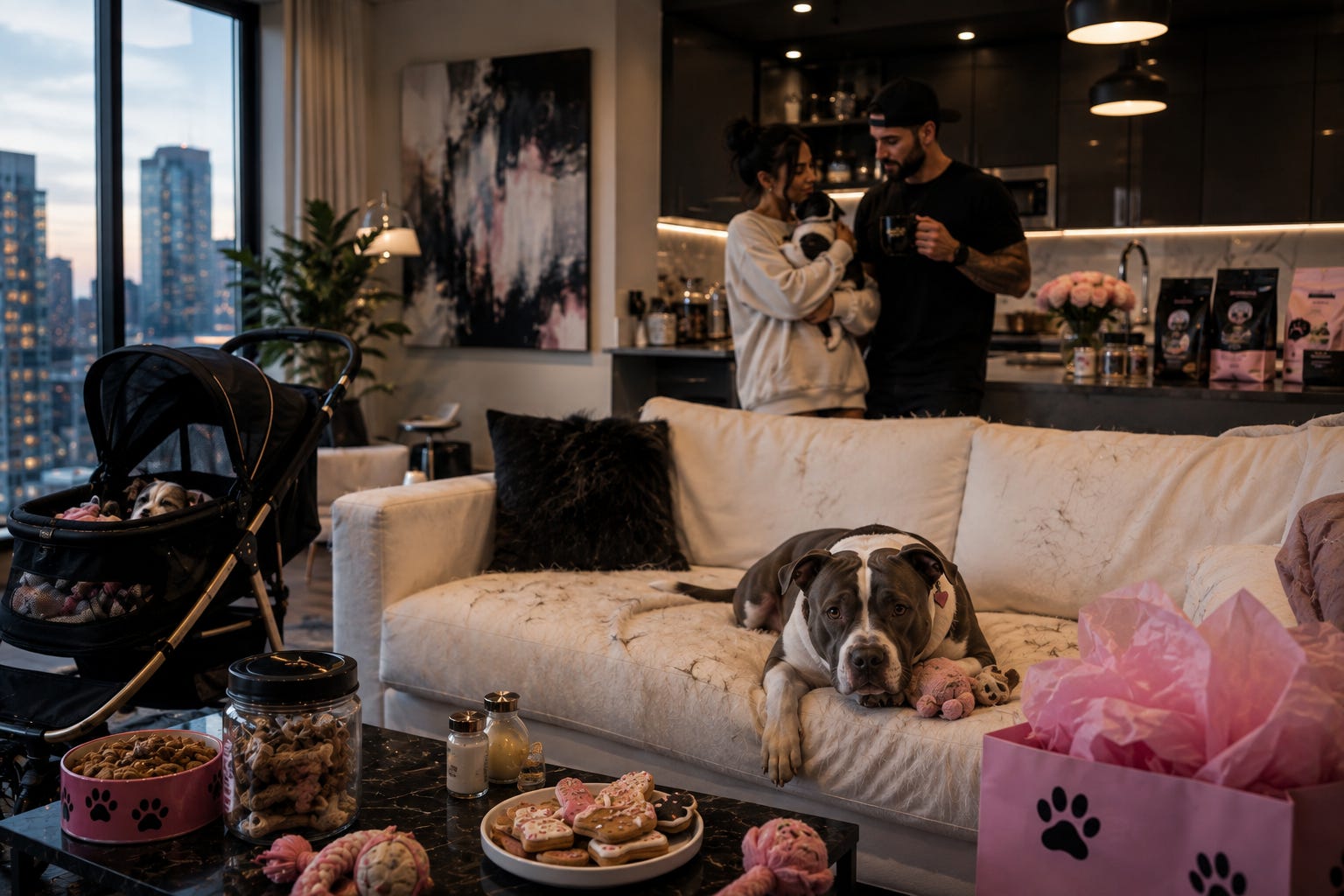
Luxury apartment or starter home.
Dual income. No kids.
Rescue pit bull.
“Dog Mom” in the bio.
Dog stroller in the hallway.
Artisanal treats in the kitchen.
Dog spa appointment on Saturday.
White couch covered in fur.
The explanation is usually some variation of the same thing: kids are expensive. Kids take too much time. They want their freedom. They don’t want to bring children into a world that’s falling apart—as if humanity spent the previous ten thousand years living at an all-inclusive resort.
Fair enough.
Meanwhile, there’s a $200 boarding charge on the credit card. Doggy daycare. Behavioral training. Surgery bills. Birthday parties. Special diets. Pet insurance.
Apparently we have dog therapy now.
There are even airlines built around flying dogs.
At some point, you have to ask whether these people rejected parenthood or simply reconstructed a lower-stakes version of it around an animal.
Pets are the new kids.
Plants are the new pets.
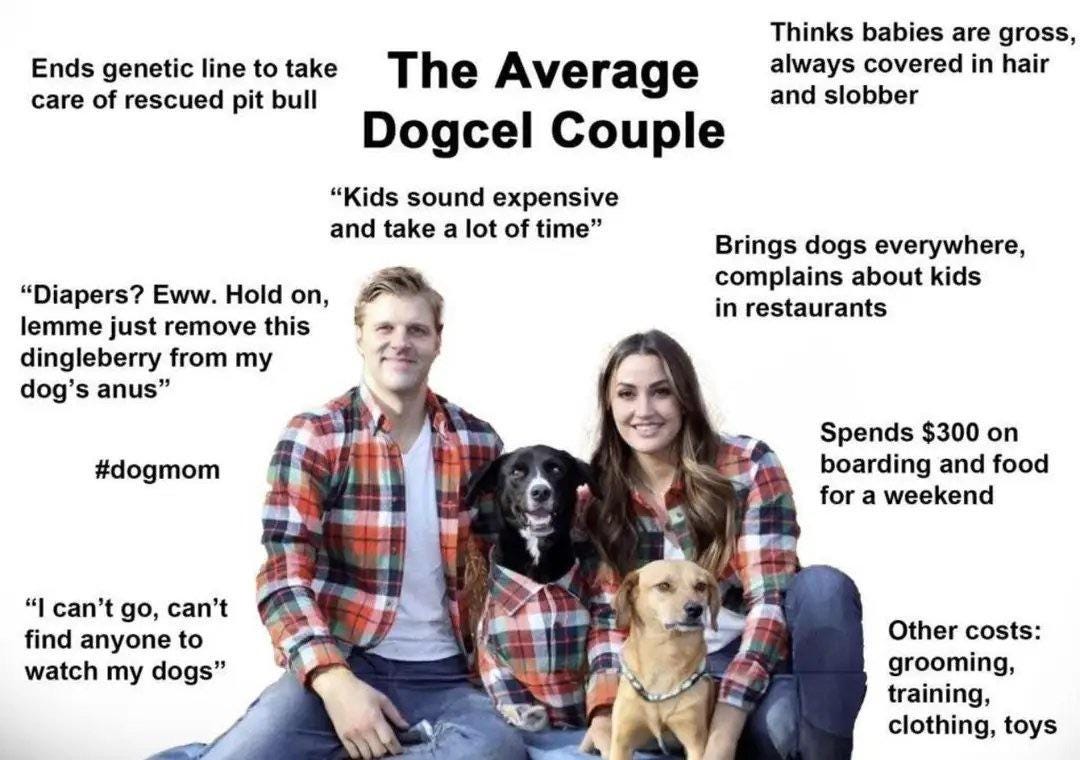
Which brings me to the Dogcel.
Dogcel (n.): A person or couple who forgoes children while elevating a dog into the emotional, social, and domestic role traditionally occupied by a child.
Owning a dog doesn’t make you a Dogcel. Not wanting children doesn’t make you a Dogcel.
The substitution does.
The Child Replacement Layer
Dogs have always provided companionship.
Something changed when companionship became substitution.
For the Dogcel, the dog functions as an emotional child: a low-risk simulation of family built around a socially acceptable object of permanent dependency.
It provides affection, routine, attachment, identity, and companionship. It needs to be fed, taken to appointments, watched while you’re away, comforted when it’s anxious, and photographed constantly.
It even gives you someone to call your “baby.”
But the resemblance to parenthood ends exactly where parenthood becomes irreversible.
There is no lineage to continue. No education to oversee. No teenager developing opinions you hate. No adult eventually separating from you and constructing a life of their own.
The dog remains dependent until the day it dies.
They used to say a dog was man’s best friend.
The Dogcel upgraded the position.
Now the dog is man’s best child.
That’s the deeper pattern. Modern adulthood increasingly optimizes for the emotional rewards of commitment while preserving control over its most irreversible forms.
And this exposes an interesting contradiction.
Some adults reject children because they’re loud, messy, expensive, irrational, and restrictive, then tolerate barking, fur, shit bags, separation anxiety, behavioral problems, boarding costs, and vacations planned around an animal’s bladder.
Maybe the difference isn’t inconvenience.
It’s control.
A child eventually develops autonomy.
A dog never has to.
Dog Narration
During my marriage, sitting around with my wife and her family had become predictable.
Every five minutes:
“Should we let the dogs in?”
Then, shortly afterward:
“Should we let the dogs out?”
Once the dogs were inside, they didn’t necessarily start talking to each other.
They started talking through the dogs.
“He’s such a gentleman.”
“She’s so sassy.”
“He said no bedtime tonight.”
“Damn, he dropped a big one.”
Meanwhile, the dog had scratched itself, trampled my balls, stared at a wall for six minutes, barked at a leaf, and taken a shit.
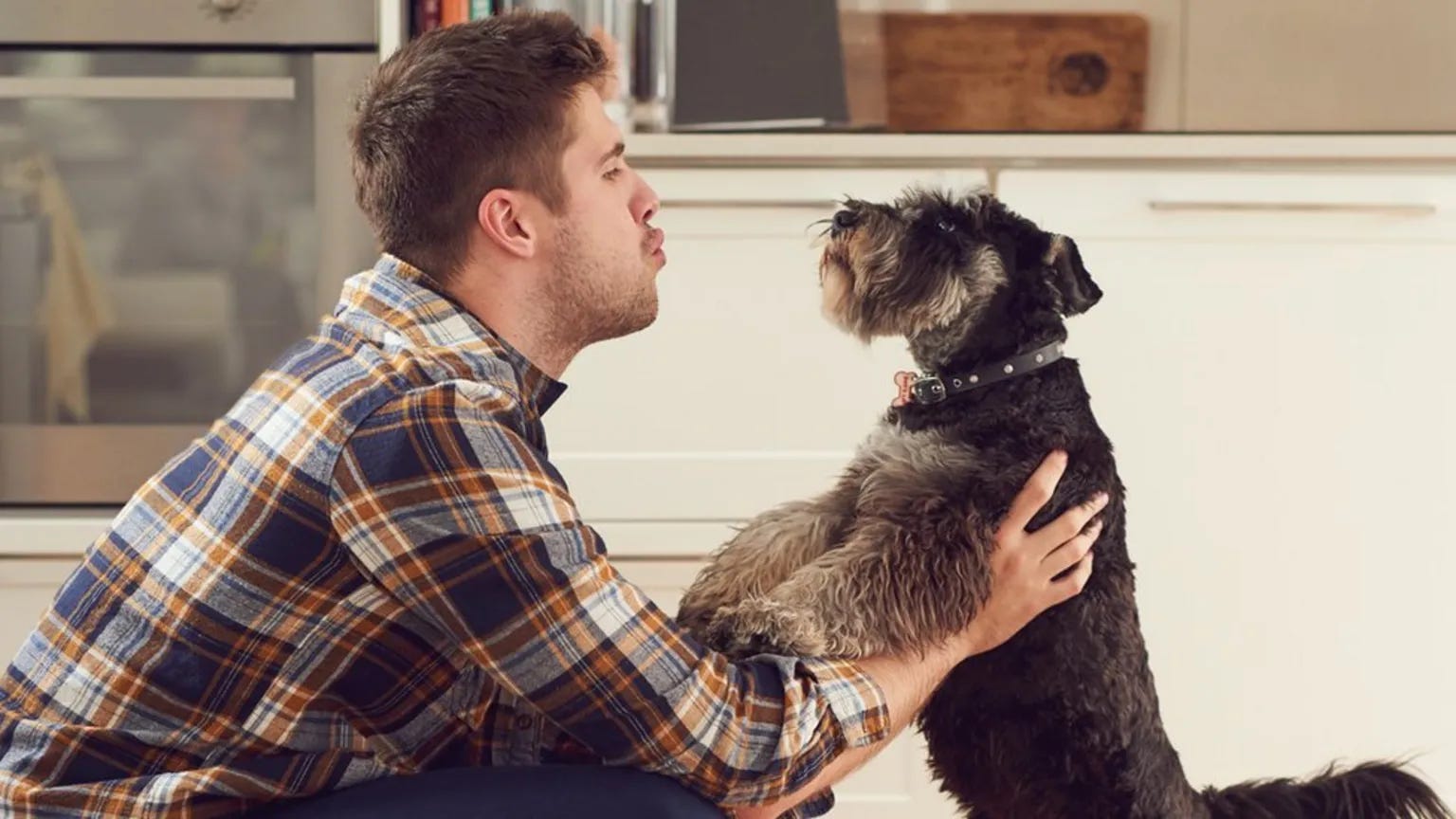
This is Dog Narration.
Dog Narration is anthropomorphic projection: assigning human motives, dialogue, emotional complexity, and personality to ordinary animal behavior.
The dog doesn’t simply walk into the room.
“He came to check on Mommy.”
It doesn’t stare at your dinner.
“He’s wondering why nobody made him a plate.”
It doesn’t refuse to move.
“He said Daddy can wait.”
Eventually, the owners become full-time spokespeople for an animal that has issued exactly zero official statements.
That’s what makes Dog Narration interesting. The owner isn’t merely observing the dog’s personality.
They’re helping construct it.
First comes a vocabulary.
Then a voice.
Then motives.
Then family roles.
Before long, the dog isn’t a pet living in the household.
He’s a little person who happens to shit outside.
There’s an irony buried underneath all of this. Some of the same people who reject children for being messy, irrational, demanding, and emotionally exhausting will spend enormous amounts of emotional energy interpreting the inner life of an animal that just barked at its own reflection.
The nurturing didn’t disappear.
It found a narrator.
The Fur Baby Economy
Dog ownership didn’t always look like this.
A generation or two ago, the dog ate kibble, slept somewhere in the house—or got chained up outside—and somehow survived without a wellness consultant.
Now the dog has infrastructure.
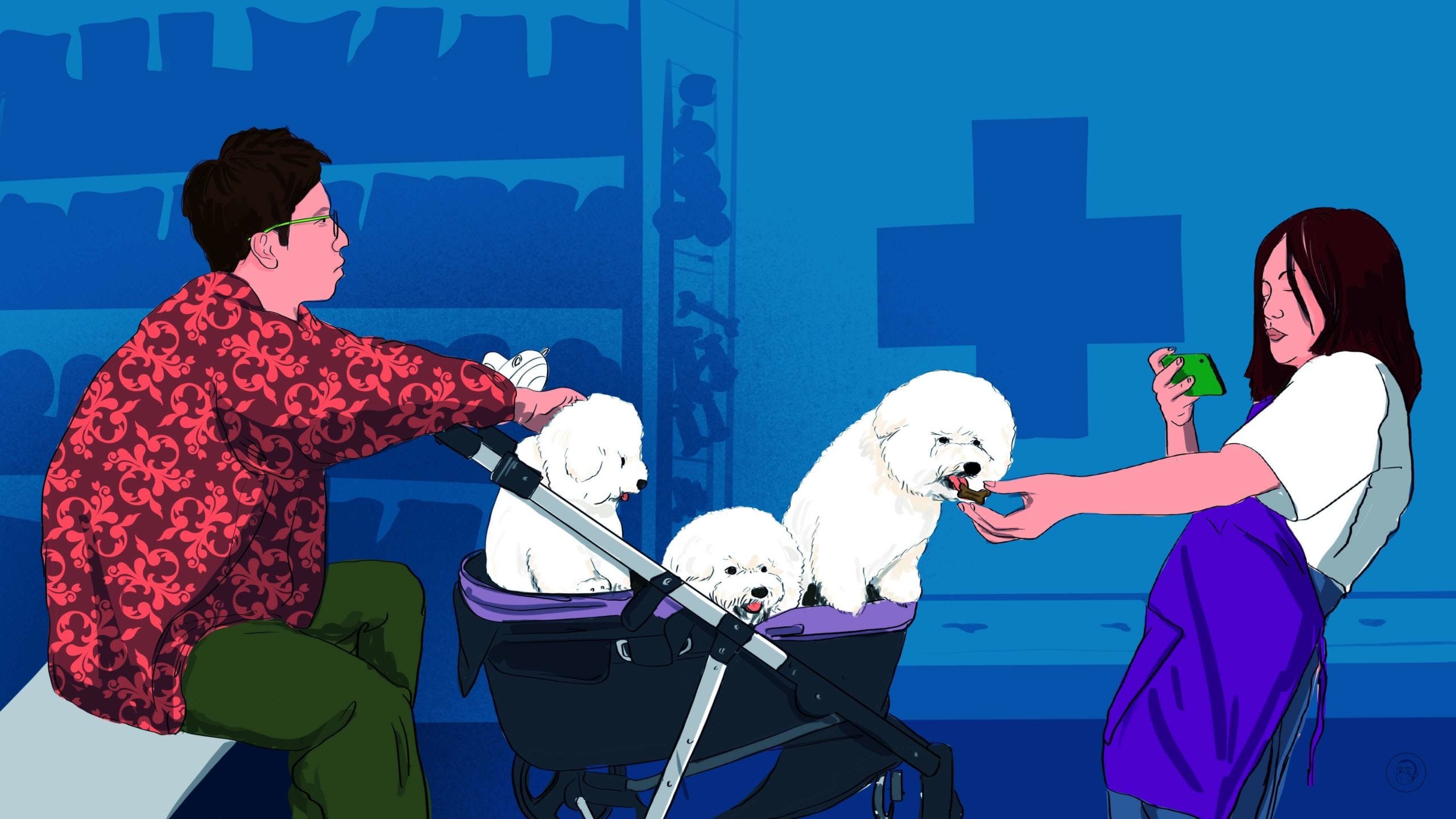
Daycare. Professional grooming. Behavioral training. Pet insurance. Subscription boxes. Birthday cakes. Designer clothing. Strollers. Luxury boarding. Specialized diets.
And enough vet appointments to maintain its own medical chart.
The pet didn’t change.
The economy built around it did.
The modern dog has become a recurring household expense supported by an entire industry dedicated to upgrading it from pet to dependent family member.
That’s what makes the economics interesting.
One of the standard arguments against having children is cost.
And children are expensive.
But some of the money supposedly preserved by avoiding parenthood doesn’t stay preserved.
It gets redirected.
Daycare still exists. Medical bills still exist. Food still exists. Boarding replaces babysitting.
Somehow, the birthday party survived.
It’s parenthood à la carte: many of the expenses, rituals, and logistics without the generational commitment waiting at the end.
The budget didn’t disappear.
The lineage did.
The Substitute Village
Modern city life eliminated much of the need for a village.
You can work from home, order groceries to your door, get dinner delivered without speaking to anyone, and live ten feet from your neighbors without ever learning their names.
It’s remarkably efficient.
It’s also remarkably isolating.
The dog fills the gap.
It breaks the silence of an empty apartment. Creates routine. Provides physical affection. Forces you outside. Gives you someone waiting at the door when you come home.
It can even function as a social bridge. Walk an attractive dog through the right neighborhood and suddenly strangers remember how to speak to each other.
For some adults, the dog becomes the most consistent relationship in daily life: more interaction than with neighbors, more physical affection than with friends, more daily contact than with extended family.
Companion.
Emotional regulator.
Wingman.
Substitute family member.
That’s what makes the Dogcel uniquely compatible with urban life.
The city made independence easier than ever.
It didn’t eliminate the need for attachment.
The modern city isolated people so effectively that dogs became emotional infrastructure.
The Quiet Replacement
None of this is really about dogs.
Dogs are simply exceptionally well suited to modern adulthood.
Modern life rewards flexibility, mobility, and optionality—the ability to change jobs, change cities, travel, sleep in, spend money on yourself, and redesign your life whenever the current version stops working.
Kids fuck with that arrangement.
They’re expensive, disruptive, permanent, and eventually become independent human beings with desires, beliefs, and problems of their own.
Somewhere along the way, children went from a default stage of adulthood to something resembling a luxury good.
Expensive.
Optional.
Nice to have if the rest of the lifestyle can support it.
The child became an upgrade.
The dog became standard equipment.
A dog offers a different arrangement.
Companionship without lineage.
Dependency without succession.
Family rituals without building a family tree.
You can call yourself Mom or Dad. Celebrate birthdays. Schedule daycare. Buy Christmas presents. Take family photos. Worry about what they’re eating. Tell everyone what they supposedly said that morning.
You get many of the emotional rituals associated with parenthood while preserving far more control over the rest of your life.
That’s why the Dogcel model fits so cleanly into modern professional culture.
It isn’t that the nurturing instinct disappeared.
Look around.
People are nurturing the absolute shit out of these dogs.
The instinct survived.
What changed was where we directed it.
Maybe that’s the larger story buried underneath the dog strollers, birthday cakes, separation anxiety, and conversations narrated on behalf of an animal licking its own asshole.
Modern adulthood didn’t eliminate the desire to nurture.
It found a version more compatible with optionality.
No child eventually growing up, developing a life of their own, and leaving.
Just a permanently dependent companion waiting at the door.
The instinct survived.
The leash replaced the bloodline.

PS
I’m opening a few 1:1 sessions for guys rebuilding after a breakup/divorce—structure, dating, routines, and getting your life tight again. If that’s you, reply or DM me.
Modern life rarely announces what it’s becoming.
The patterns show up first.
🔒 Paid subscribers get future Dispatches, exclusive field reports, and the complete Deadbeat Zaddy archive.


From the Vault:
Poison for the Heart • The Heartiste Maxims • The Desi Playboy Manual • The Bonecrker Codex — free download
Z-Ledger:
A private net worth & financial clarity tool I use to track the rebuild.
Launch →
This is so true. Especially true in San Francisco and surrounding areas.
These people aren’t emotionally mature either, despite what they want you to believe